The UAE Labour Law is like a rule book that protects both workers and companies in the private sector. It makes sure everyone is treated fairly, gets paid on time, and works in a safe place. In 2026, the main law is still Federal Decree-Law No. 33 of 2021. This guide explains everything in easy words so even a student can understand. Whether you are new to a job in Dubai, Abu Dhabi, or any emirate, these rules apply to you.
What is the UAE Labour Law?
The UAE Labour Law is the official set of rules made by the government to manage jobs in private companies. It covers everything from signing a contract to getting your final pay when you leave a job. The law started in February 2022 and replaced the old 1980 law. It helps create a modern and fair workplace. The Ministry of Human Resources and Emiratisation (MoHRE) is the main department that watches over these rules. It applies to most private sector workers, both UAE nationals and people from other countries. Special zones like DIFC and ADGM have their own slightly different rules.
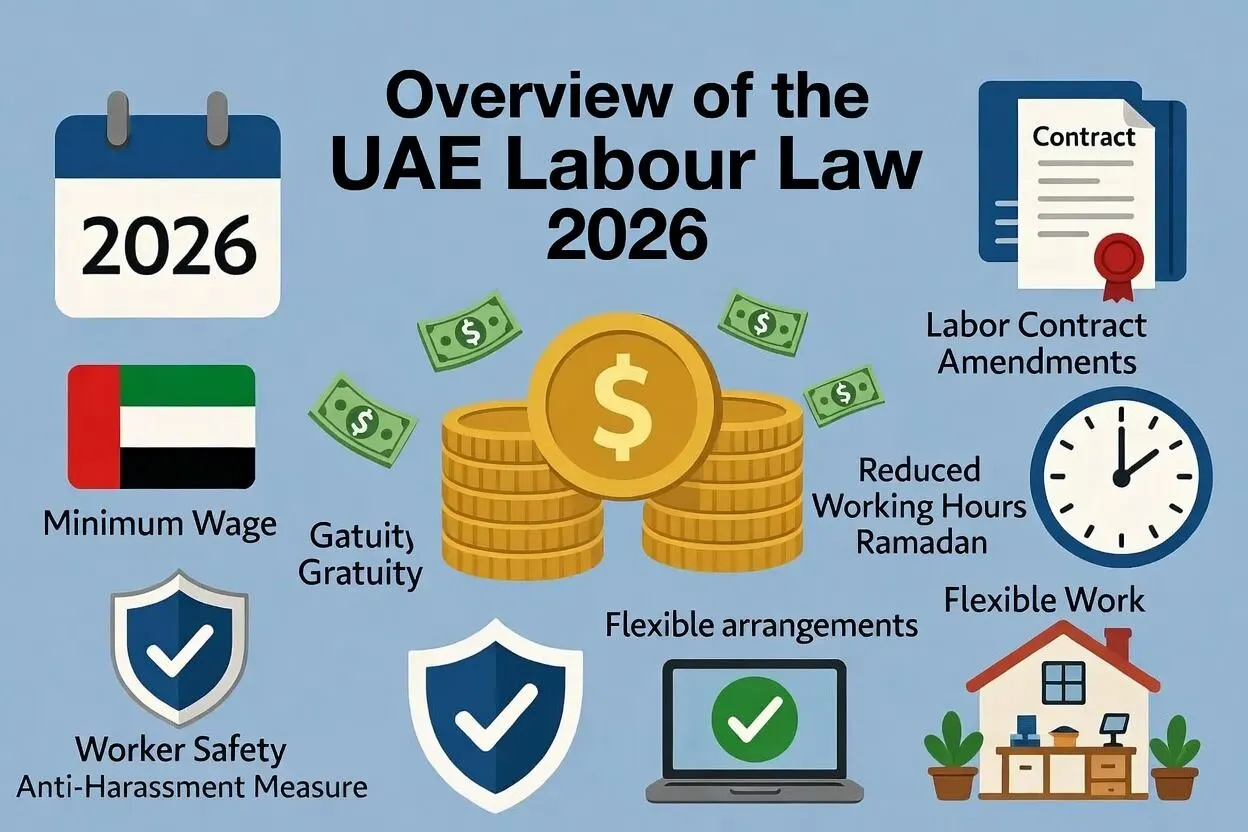
Overview of the UAE Labour Law 2026
Here are the important changes and reminders for 2026:
- Emirati minimum wage rose to AED 6,000 per month from 1 January 2026. Companies have until 30 June 2026 to update old contracts.
- Voluntary Savings Scheme is growing fast. Companies can now put money every month into approved investment funds instead of paying a big lump-sum gratuity later.
- Penalties for breaking rules are up to AED 1,000,000 in serious cases.
- Ramadan working hours are reduced by 2 hours per day.
- Dispute resolution is faster. MoHRE settled 98.6% of cases in 2025 without going to court.
- More focus on flexible work, anti-harassment rules, and worker safety during the hot summer months.
These updates keep the law balanced and up to date.
Watch this YouTube video for a clear and easy explanation of UAE Labour Law.
Types of Employment Contracts in the UAE
The law now allows only limited-term contracts. These have a clear start and end date, usually 1 to 3 years. You can renew them easily. The law also supports six work models:
- Full-time
- Part-time
- Temporary
- Flexible
- Remote
- Project-based
All contracts must be written clearly and registered with MoHRE. This helps avoid confusion later.
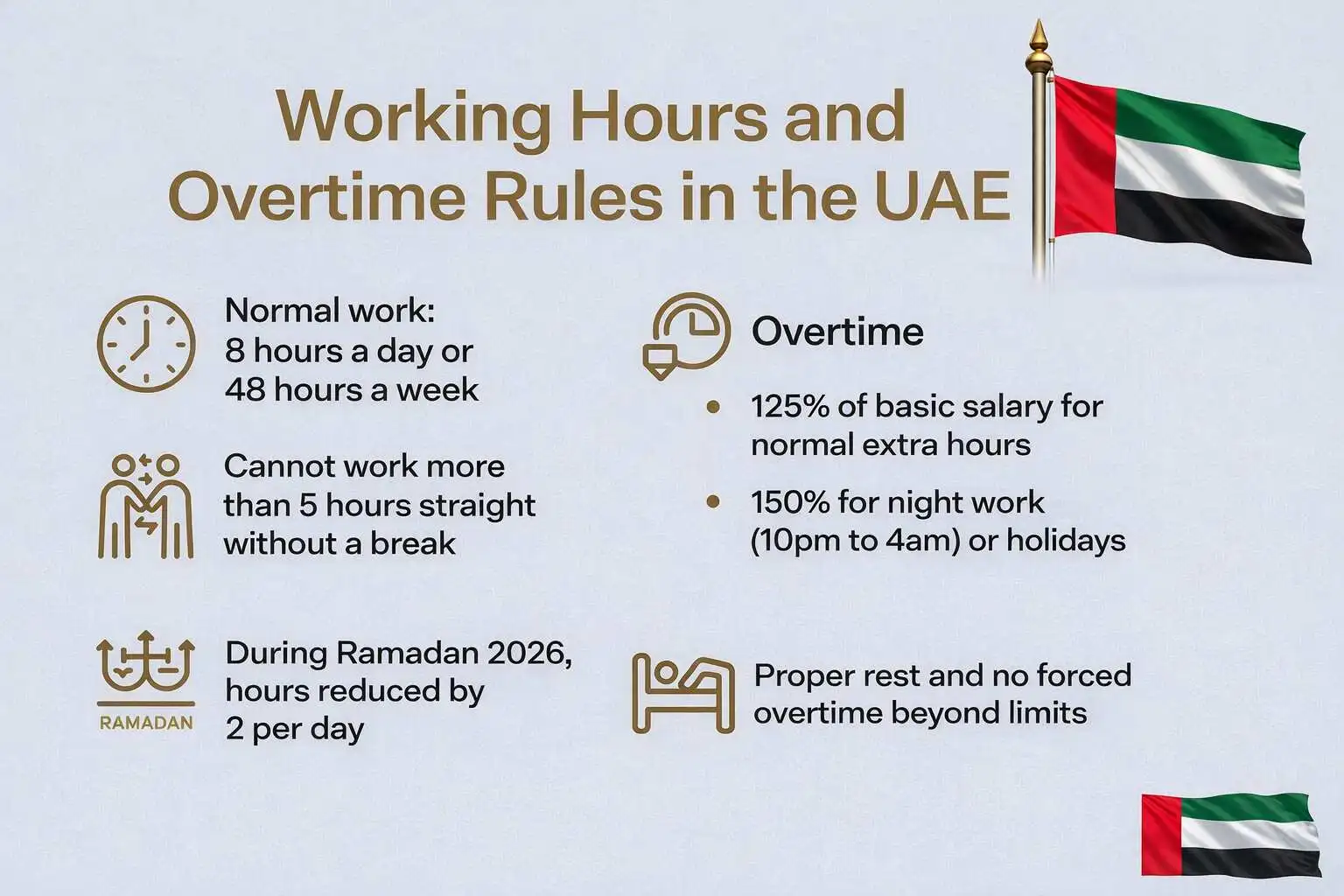
Working Hours and Overtime Rules in the UAE
Normal work is 8 hours a day or 48 hours a week. You cannot work more than 5 hours straight without a break. Overtime pays extra:
- 125% of basic salary for normal extra hours
- 150% for night work (10 pm to 4 am) or holidays
During Ramadan 2026, hours drop by 2 per day. Companies must give proper rest and cannot force overtime beyond limits. These rules keep workers healthy and productive.
Employee Leave Entitlements Under UAE Labour Law
You earn paid leave after probation. Here is a simple table:
| Leave Type | Days Allowed | Pay Details |
|---|---|---|
| Annual Leave | 30 calendar days | Full pay after 1 year |
| Sick Leave | Up to 90 days per year | 15 full + 30 half + 45 unpaid |
| Maternity Leave | 60 days | 45 full pay + 15 half pay |
| Paternity Leave | 5 working days | Full pay |
| Other leaves | Hajj, study, compassionate | As per the contract or law |
End of Service Gratuity Rules in the UAE
End of service gratuity is a mandatory payment when you finish at least 1 year of continuous service. It is based only on your last basic salary (no allowances). The simple rule is:
- 21 days’ basic salary for each of the first 5 years
- 30 days’ basic salary for every year after that
The total can never exceed 2 years of basic salary. Unpaid leave days do not count. If your company joins the Voluntary Savings Scheme, future gratuity changes to monthly fund contributions, but any amount earned before joining is still protected and paid separately. For a quick and accurate check of your amount, you can use a free online tool like the UAE Gratuity Calculator.
Probation Period Rules
Probation can last up to 6 months (no extension allowed). During this time:
- The company can end the contract with 14 days’ written notice.
- You can leave to join another UAE employer with 30 days’ notice.
- Most leave benefits do not start until probation ends.
This short period lets both sides test if the job is a good fit.
Termination of Employment Under UAE Labour Law
After probation, notice must be at least 30 days and up to 90 days. Final settlement (salary, leave pay, gratuity) must be paid within 14 days. You keep full gratuity rights if you serve the notice period properly. An employee can be terminated immediately without notice only if they are involved in serious misconduct. The law protects you from unfair dismissal.
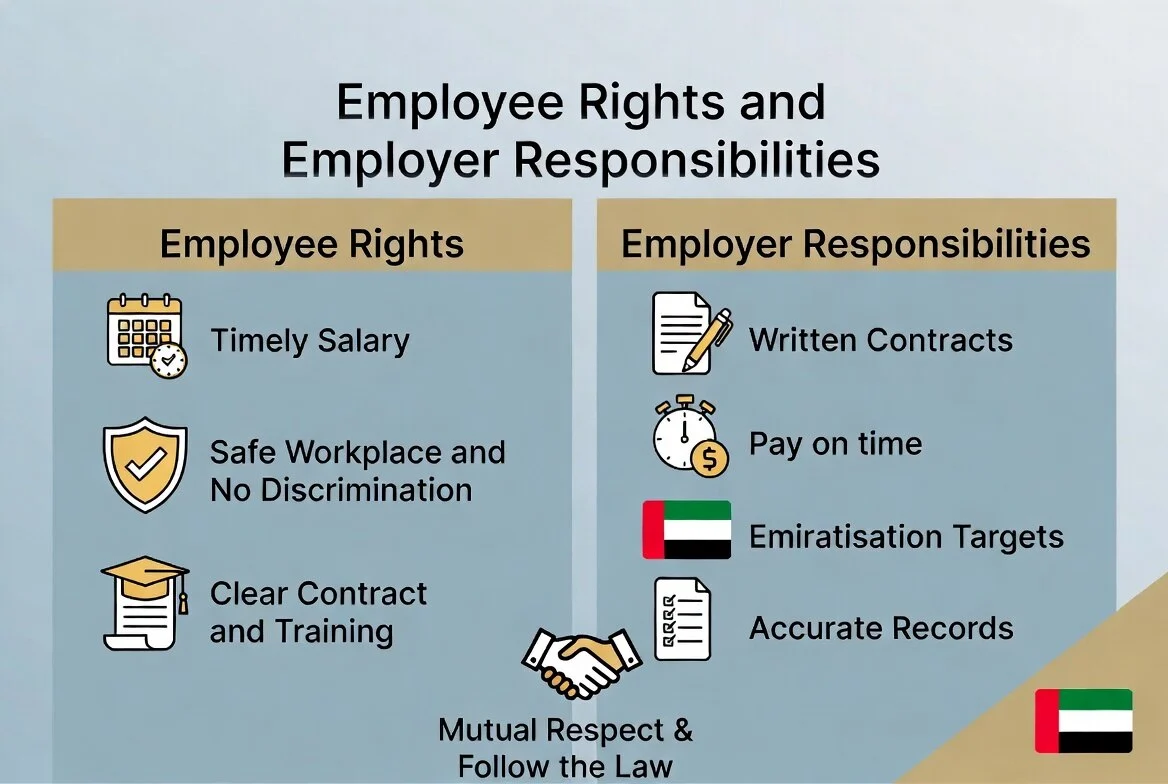
Employee Rights and Employer Responsibilities and
Employees have the right to:
- Timely salary through WPS (Wage Protection System)
- Safe workplace and no discrimination
- Clear contract and proper training
Employers must:
- Provide written contracts
- Pay on time
- Follow Emiratisation targets
- Keep accurate records
Both sides must treat each other with respect and follow the law.
How UAE Labour Law Affects
For employees, the law gives clear protection, fair pay, and peace of mind.
For employers, it creates a stable workforce and reduces court cases when rules are followed. Everyone wins when the law is respected.
Workplace Policies and Anti-Discrimination Rules
The law bans discrimination based on gender, race, religion, or disability. Harassment, bullying, or forced labour is strictly illegal. Companies must have clear policies on promotions, training, and complaints. Everyone gets equal pay for equal work. These rules create a respectful and inclusive workplace.
Maternity Leave and Family-Related Benefits
Mothers get 60 days of maternity leave with good pay. They also receive up to 2 hours per day for nursing in the first 6 months after return. Fathers get 5 paid days of paternity leave. Extra support is available for families with children who have disabilities. These benefits help workers balance family and career.
Penalties and Compliance for Employers
Breaking the law can cost a company between AED 100,000 and AED 1,000,000 per violation. Common penalties are for:
- Late salary payments
- Fake Emiratisation
- Unsafe working conditions
- Unfair termination
MoHRE can suspend business or ban new visas until the company fixes the problem. Good compliance keeps everything smooth.
Dispute Resolution and Labour Complaints Process
If you have a problem, first file a free complaint on the MoHRE app or website. Most cases (98.6% in 2025) are solved quickly through mediation. If needed, it goes to court. The process is fast, fair, and digital. No lawyer is required at the initial stage.
Future Outlook of UAE Employment Laws
The UAE wants to be one of the best places to work in the world. Expect more digital tools, stronger Emiratisation support, and wider use of the Voluntary Savings Scheme. The government will keep updating rules to match new work styles and economic needs. The goal is happy workers and successful companies.
Frequently Asked Questions
What are the 4 new labour laws?
There are no exact “4 new labour laws” introduced in 2026. The main law is still Federal Decree-Law No. 33 of 2021. Important recent updates include higher penalties for violations, a stronger focus on flexible work models, a minimum wage of AED 6,000 for Emirati employees, and promotion of the Voluntary Savings Scheme for gratuity.
What is the basic salary in the UAE Labour Law?
Basic salary is the fixed amount mentioned in your employment contract, without any allowances like housing, transport, or bonuses. Gratuity and many other benefits are calculated only on this basic salary. It must be clearly written in the contract and paid through the Wage Protection System (WPS).
Can an employer reduce salary in the UAE?
No, an employer cannot reduce your salary unilaterally. Any salary reduction needs your written consent and must be updated and approved in the new contract with MoHRE. Without your agreement, such a change is not allowed and can be challenged.
What is the notice period for the UAE labour law?
The standard notice period is a minimum of 30 days and a maximum of 90 days (as mentioned in your contract). During probation, it is usually 14 days. Both the employer and employee must follow the notice period unless there is gross misconduct.
What is the labour law for employees in the UAE?
The UAE Labour Law protects employees’ rights regarding contracts, salary, working hours, leave, gratuity, safety, and fair treatment. It applies to all private sector workers and ensures balanced rights for both employees and employers.
What is Article 47 of the UAE labour law?
Article 47 says that terminating an employee is unlawful if it happens because the employee filed a serious complaint with MoHRE or a lawsuit against the employer. In such cases, the court can order the employer to pay compensation.
What is Article 37 of the UAE labour law?
Article 37 is about work injuries and occupational diseases. The employer must pay for the employee’s full medical treatment and continue paying full salary during treatment (up to 6 months), then half salary for another 6 months if needed. It also covers compensation in case of disability or death.
Final Words
Understanding the UAE Labour Law in 2026 is essential for every employee and employer working in the UAE. From employment contracts and working hours to leave policies and end-of-service gratuity, the law provides a complete system to ensure fairness, transparency, and protection in the workplace.With the continued implementation of Federal Decree-Law No. 33 of 2021 and supervision by the Ministry of Human Resources and Emiratisation, the UAE is building a modern and balanced work environment for both local and international employees.
Whether you are starting a new job or planning to leave your current one, knowing your legal rights, salary rules, and gratuity benefits helps you avoid mistakes and make better financial decisions.To stay on the safe side, always keep your contract updated, follow official guidelines, and use tools like the Gratuity Calculator UAE to estimate your end-of-service benefits accurately.
In simple words, when you understand the law, you protect your future.